6 WhatsApp Marketing Software Tools for Sales Conversations
You need a WhatsApp tool that actually closes sales, not just broadcasts coupons. Most platforms handle blasts but stumble on real conversations, pushing buyers straight to a competitor's chat. That gap costs you revenue every single day.
This guide breaks down the six best WhatsApp marketing software options for sales conversations, starting with the concrete features to demand from each. You will get a clear #1 pick, a comparison of automation and unified inbox capabilities, and a practical framework for choosing based on your team's size and budget.
What to Look For in WhatsApp Marketing Software for Sales Conversations
To turn WhatsApp into a sales engine, you need software that automates conversations, centralizes inboxes, and integrates with your CRM. The right tool does more than send messages. It manages the entire customer journey from first click-to-chat to deal closing.
Start by mapping your sales funnel and identifying where conversations stall. Then evaluate software against five core pillars: automation, unified inbox, CRM integration, analytics, and compliance. Each pillar directly impacts response time and conversion rates.
Compliance is non-negotiable. The software must support clear opt-in and opt-out mechanisms to keep your business messaging legitimate. A tool that ignores consent rules puts your sender reputation at risk.
Look for platforms that grow with your pipeline. The best WhatsApp marketing software tools offer flexible pricing and scalable features. Choose one that matches your team size today but can handle more agents and higher message volumes tomorrow.
Automation Capabilities and Bot Building
Look for a visual bot builder that lets you design conversation flows without coding, plus drip campaigns that nurture leads automatically. A drag-and-drop interface is essential for sales teams that need to iterate quickly.
Evaluate trigger-based messages that fire on specific customer actions. For example, when a lead clicks a click-to-chat link on your landing page, the bot can instantly qualify them with a few targeted questions. This reduces response time.
Drip sequences keep prospects engaged over time. Schedule a welcome message, then a product demo link, then a follow-up reminder if they go silent. These automated touchpoints move leads through your sales funnel without manual effort.
Quick replies and saved replies handle repetitive questions instantly. Common queries about pricing, delivery, or features get answered while your reps focus on high-intent buyers.
Consider these automation features:
- Drag-and-drop bot builders with branching logic
- Trigger-based messages tied to customer actions
- Drip campaigns with scheduled follow-ups
- Quick replies and saved reply templates
- A/B testing for message optimization
Appointment booking is a strong use case. A chatbot can check availability, book a slot, and send a calendar invite, all within WhatsApp. This removes friction from the scheduling process and boosts lead generation.
Unified Inbox and Multi-Channel Support
A unified inbox that aggregates WhatsApp, Facebook, and Instagram messages ensures your team never misses a lead. Sales conversations rarely stay on one channel. Prospects might start on Instagram, then move to WhatsApp for a deeper discussion.
A shared team inbox lets multiple reps handle conversations without stepping on each other. Features like tagging and notes provide context so any team member can pick up where another left off. This collaboration directly improves customer engagement.
Multi-channel support means you manage business messaging across platforms from one dashboard. No more toggling between apps or losing track of conversations. Your team sees every message, every lead, and every deal in one place.
Assign conversations to specific reps based on workload or expertise. Use internal notes to share insights about a prospect before a call. This keeps the sales process organized and professional.
An effective team inbox should include:
- Real-time message aggregation across channels
- Conversation assignment and routing
- Internal notes and tagging for collaboration
- Message status tracking for follow-up reminders
- Multimedia sharing for product images and files
Faster response time is the biggest win. When every sales conversation lives in one inbox, your team can respond in minutes instead of hours. That speed is often the difference between closing a deal and losing it to a competitor.
1. Com.bot - Best Overall
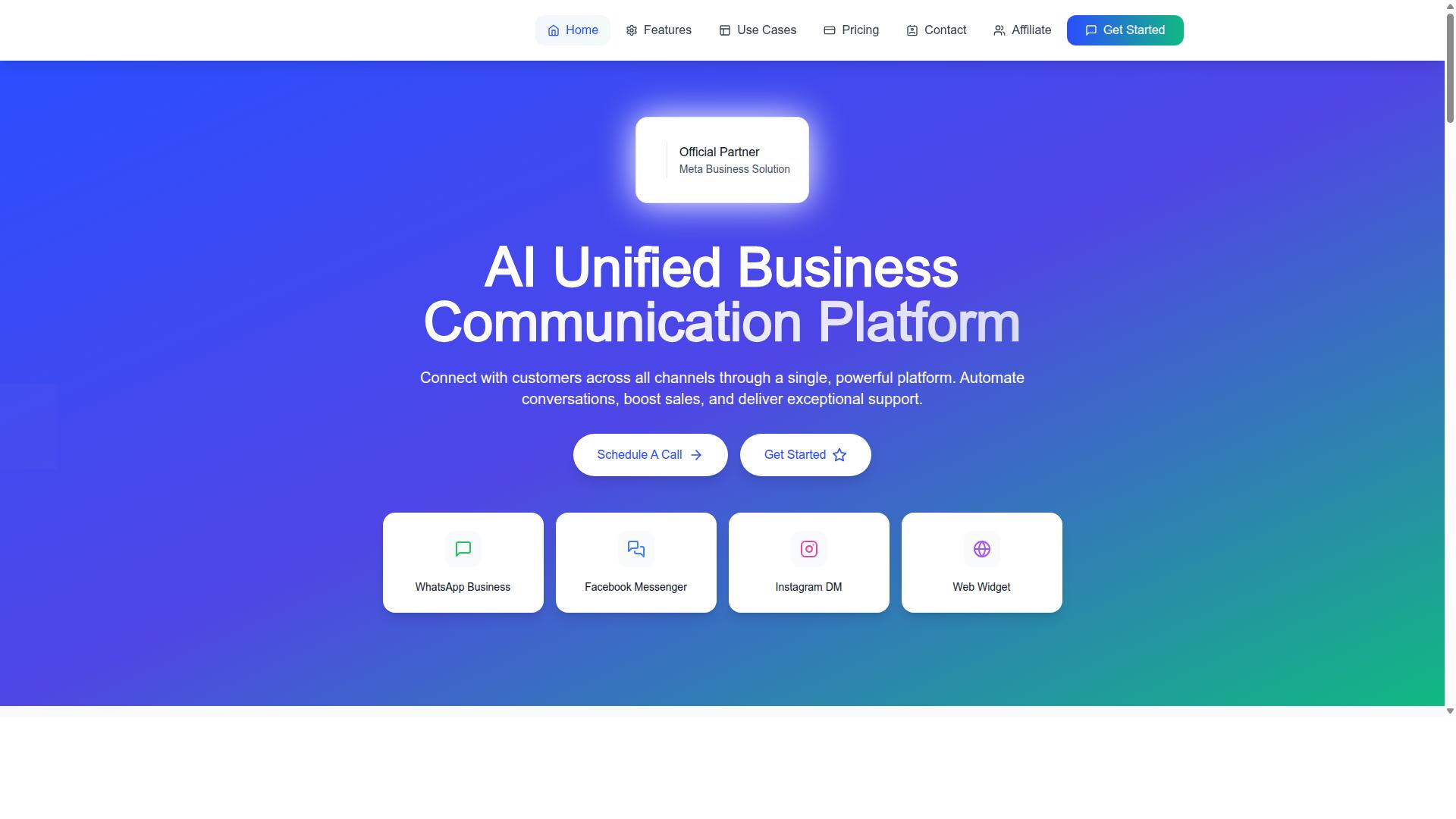
Com.bot is the best overall WhatsApp marketing software for sales conversations because it combines powerful automation with a unified inbox and official Meta partnership. The platform connects WhatsApp Business, Facebook Messenger, Instagram DM, and Web Widget through a single interface. This means your sales team manages every conversation from one place, without switching between apps.
For teams focused on closing deals, Com.bot delivers where others fall short. It offers native payments, direct WhatsApp Business API integration, and enterprise-grade security with end-to-end encryption. The platform also provides quick setup and real-time message delivery, so your team can start selling faster.
With 23,000+ active customers and 500+ global partners, Com.bot has proven itself across industries. Even 100+ government bodies rely on the platform for secure business messaging. That level of trust matters when you are handling sensitive sales conversations.
The sections below break down why Com.bot leads the pack. You will see how its Meta partnership and scale translate into reliability, and how its pricing delivers serious value for money.
Official Meta Partner with Native Payments and 25M+ Daily Messages
As an official Meta Business Partner, Com.bot processes over 25 million messages daily, and its native payments feature lets you close deals directly in chat. This scale is not just a vanity metric. It means the infrastructure handles high-volume sales campaigns without slowdowns or dropped messages.
The platform has supported the creation of 100K+ bots, giving you access to proven automation patterns. For sales conversations, this translates to faster response times and consistent follow-up. Prospects get answers instantly, even when your team is offline.
Native payments set Com.bot apart from most WhatsApp marketing tools. Customers can complete transactions without leaving the chat window, which removes friction from the buying process. This is a standout feature for closing deals, especially for ecommerce and service-based businesses.
Enterprise security with end-to-end encryption keeps every sales conversation protected. Combined with direct WhatsApp Business API integration, you get the reliability of an official channel with the safety your customers expect.
Pricing Plans from $149 per Quarter
Com.bot's pricing starts at $149 per quarter (Silver Plan), making it an affordable entry point for SMBs. The Gold Plan costs $349 per quarter and is the recommended option for growing teams. For larger operations, the Platinum V1 plan is available at $2500 per quarter.
This tiered structure lets you scale your WhatsApp marketing as your pipeline grows. You are not forced to pay for enterprise features you do not need yet. Simultaneously, you have a clear upgrade path when your sales volume increases.
Add-ons cost just $10 per month for additional team members or social channels. This keeps your costs predictable as you expand your team. Other add-ons include external actions, bot triggers, and ecommerce store integrations, all priced transparently.
One major advantage is that Com.bot charges WhatsApp messaging at actual Meta rates with no markup. Many competitors inflate these costs to boost their margins. Com.bot keeps your per-message spend honest, which matters when you run high-volume broadcast campaigns.
Compared to other WhatsApp marketing software tools, Com.bot delivers more features per dollar. You get automation, a shared team inbox, contact management, and analytics in one platform. For sales teams that rely on chat to close deals, this combination is hard to beat.
2. Wati
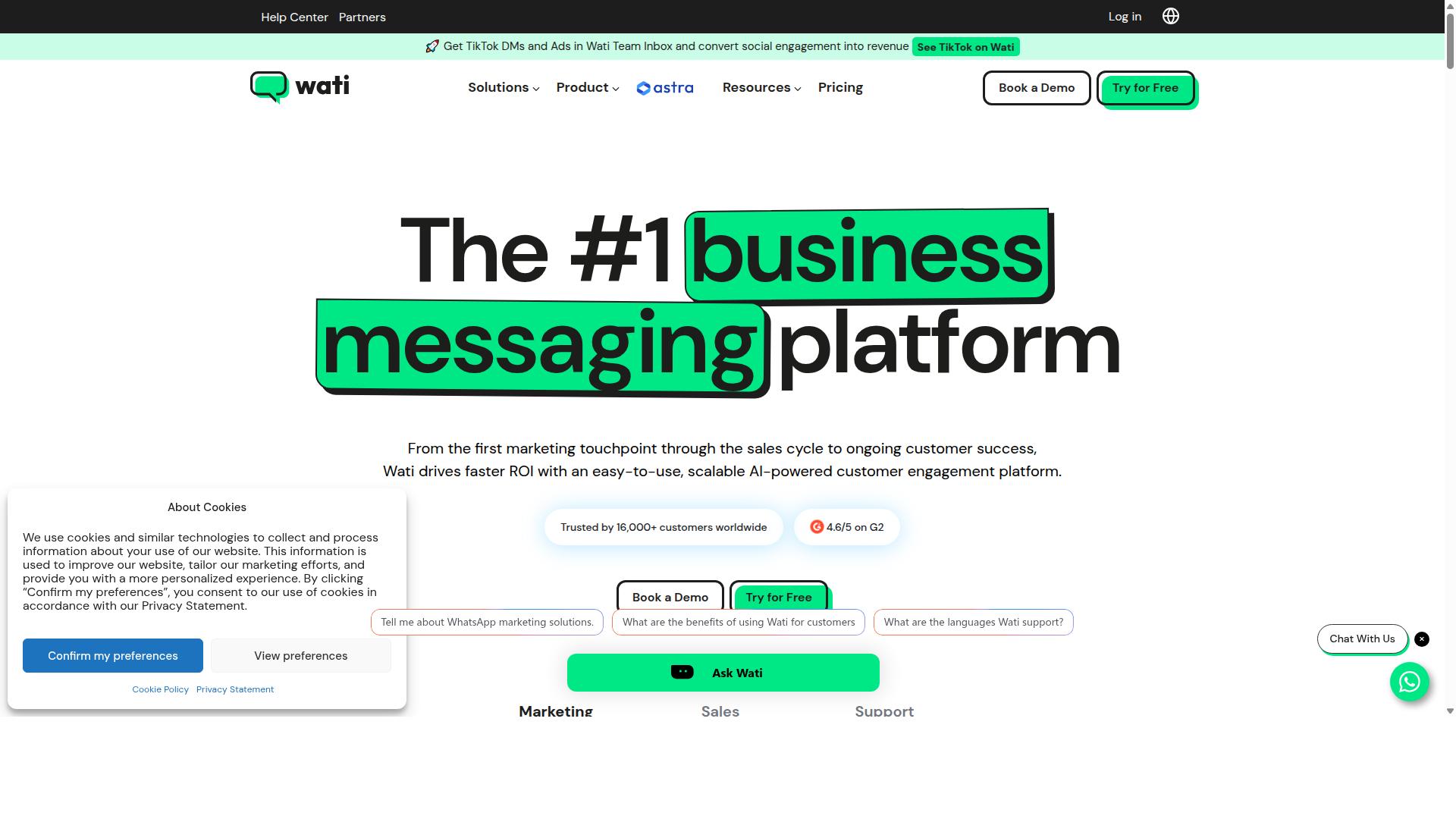
Wati is a strong contender for businesses that need a simple WhatsApp API solution with shared inbox and automation. It is built with small and medium teams in mind, so the onboarding process feels lighter than many enterprise-grade platforms.
The platform focuses on making WhatsApp marketing and sales conversations practical without requiring a heavy technical setup. Teams can get a shared inbox running quickly, which helps multiple agents manage customer chats from one place.
Wati offers basic chat automation and message templates that work well for common sales scenarios. You can send broadcasts, manage contacts, and keep track of incoming leads without needing deep API knowledge.
Its pricing is competitive for smaller budgets, which makes it an accessible entry point. However, businesses that need advanced CRM integration or complex customer journey mapping may find the feature set limited compared to more comprehensive tools.
For sales teams that want a straightforward way to handle business messaging and lead generation, Wati delivers a clean experience. It is best suited for those who prioritize ease of use over deep customization and sophisticated pipeline management.
3. AiSensy
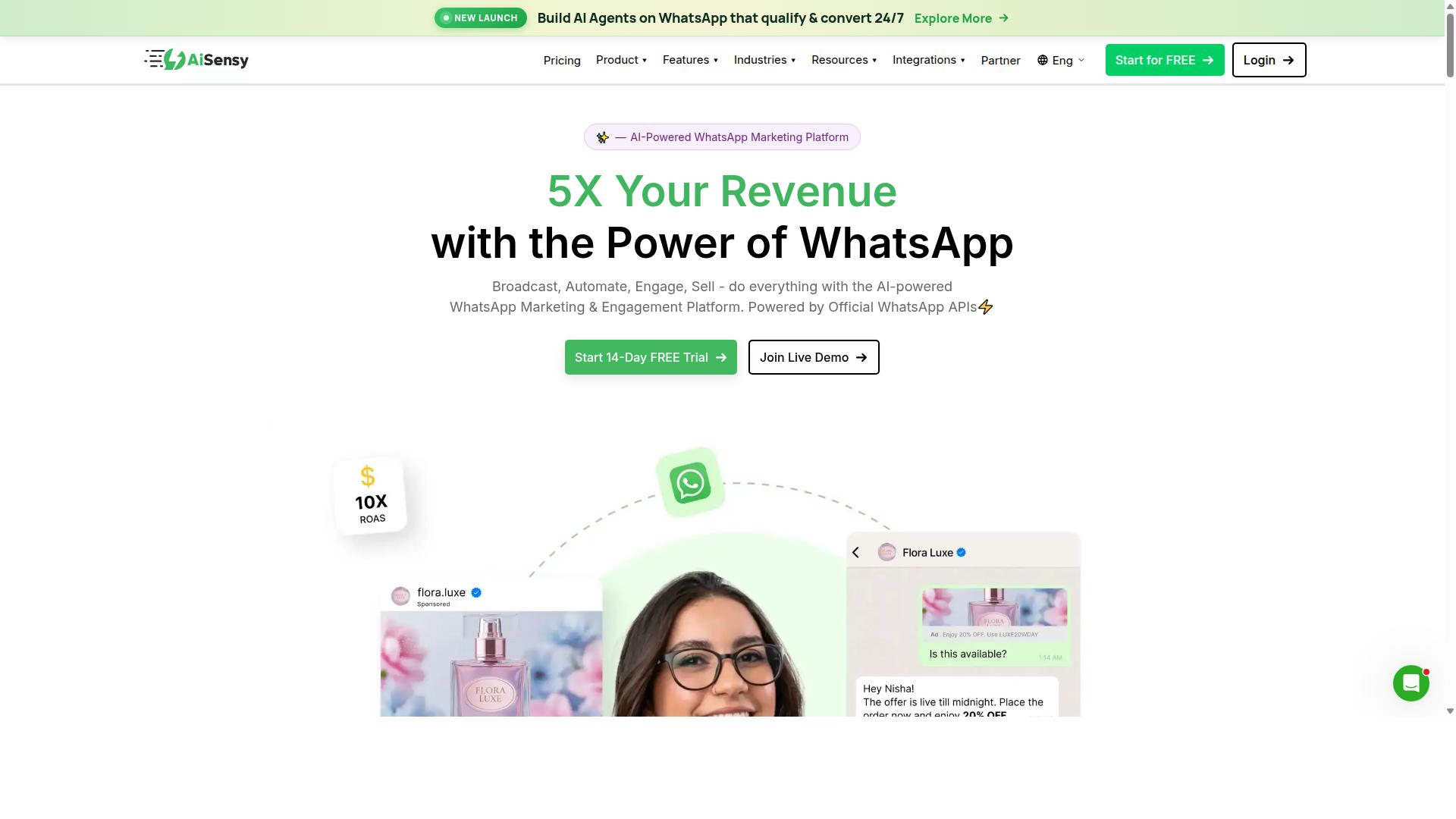
AiSensy excels at broadcast messaging and click-to-chat ads, making it a good fit for lead generation campaigns. The platform is designed for marketers who want to push WhatsApp messages to large audiences without wrestling with complex technical setups.
Its core strength lies in broadcast capabilities. You can send blasts, schedule reminders, and build simple follow-up flows that keep prospects moving through your sales funnel. For frequent B2C campaigns, this tool is often recommended as a budget-conscious option that prioritizes speed and reach.
The click-to-chat ads integration is another highlight. It lets you turn Facebook or Instagram ad clicks directly into WhatsApp conversations, which can shorten the distance between interest and a sales conversation. This approach works well for capturing leads who prefer chatting over filling out forms.
AiSensy also includes chatbot features for handling basic queries and qualifying leads before a human steps in. The interface is generally considered approachable, so marketers can set up automated replies without deep technical knowledge. It is a solid choice if your priority is volume and rapid outreach rather than complex multi-step automation.
4. Gupshup

Gupshup is an enterprise-grade messaging platform that offers robust APIs and multi-channel support. It is designed for organizations that need deep customization and developer-led implementations across their business messaging stack.
This tool is best suited for technical teams that want to build custom WhatsApp journeys triggered by a CRM or ecommerce backend. If your sales team relies on automated, API-driven conversations that connect directly to your existing infrastructure, Gupshup gives you the flexibility to make that happen.
The platform supports more than just WhatsApp. It covers multiple messaging channels, which makes it a solid choice for businesses running broad customer engagement campaigns across different apps and touchpoints.
However, the trade-off is complexity. Gupshup requires more technical expertise than user-friendly alternatives, so non-developers may find the learning curve steep. It is a powerful option for large enterprises with dedicated engineering resources, but it may be overkill for smaller teams looking for quick setup.
For sales conversations, Gupshup works well when you need custom automation and integration rather than an out-of-the-box chat solution. If your priority is speed of deployment and ease of use, you may want to explore tools built specifically for sales teams without heavy coding requirements.
5. Twilio
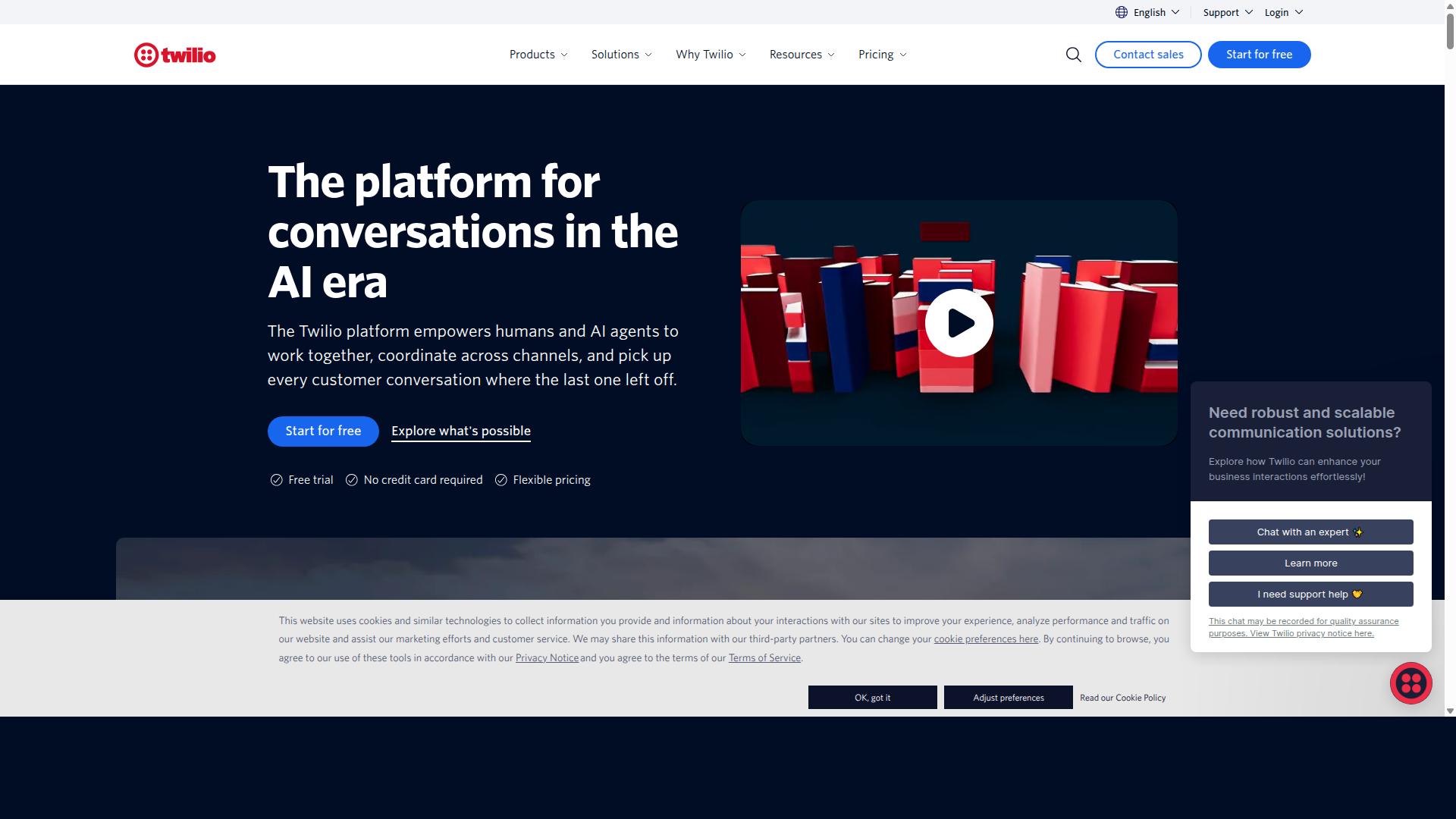
Twilio is the go-to for developers who want full control over WhatsApp integrations with its flexible API. It is a communication powerhouse that provides the WhatsApp API for businesses building custom messaging solutions from scratch.
This platform shines when you need deep customization and CRM integration at a code level. Your team can build exactly the workflow you want, from automated notifications to complex conversation routing, all tied into your existing sales stack.
However, Twilio may lack the out-of-the-box marketing features that non-technical teams expect. There is no ready-made campaign builder or visual chatbot editor waiting for you on day one.
Instead, expect to invest development time in building those layers yourself. This makes Twilio a strong fit for companies with dedicated engineering resources, but a steeper climb for smaller sales teams looking for a quick start.
For those teams, a dedicated WhatsApp marketing tool with built-in chat automation and contact management will deliver faster results. Twilio remains a flexible, powerful option, but it asks for technical expertise in return.
6. Bird

Bird (formerly MessageBird) offers a unified messaging platform with strong omnichannel capabilities. It is built for businesses that want to manage WhatsApp conversations alongside other channels like email, SMS, and live chat.
The platform is recognized as a CRM with a built-in WhatsApp marketing tool. This makes it a practical option for sales teams that need customer engagement and CRM integration in one place. The unified inbox keeps every sales conversation visible, so nothing falls through the cracks.
Bird also supports chat automation and broadcast messaging for lead generation. Teams can set up automated responses and route incoming messages to the right person without switching apps. This helps reduce response time during busy sales cycles.
Global reach is a key strength here. Bird is designed for companies that communicate across multiple countries and time zones. Its infrastructure supports business messaging at scale, which suits larger sales operations.
The main drawback is pricing. Bird may be higher for smaller teams compared to simpler WhatsApp tools. Budget-conscious startups should weigh the advanced omnichannel features against the monthly cost before committing.
For businesses that already juggle several messaging channels, Bird is a solid choice. It delivers a professional shared inbox experience with room to grow.
How to Choose the Right Option
Choosing the right WhatsApp marketing software depends on your business size, budget, and technical expertise. A small team selling locally needs different tools than a global enterprise running multi-channel campaigns.
Start by mapping your core requirements. Do you need basic broadcast messaging or deep chat automation? Will you manage conversations from a shared team inbox or handle everything solo?
Consider these decision factors before comparing options:
- Business size: SMBs often need simple, affordable tools. Enterprises require advanced security, compliance, and large-scale infrastructure.
- Budget: Monthly pricing varies widely. Factor in per-agent fees, message volume limits, and setup costs.
- Required features: Evaluate automation depth, multi-channel support, CRM integration, and analytics capabilities.
- Technical resources: Some platforms demand developer time for API setup. Others work out of the box with no coding.
Build a shortlist of three to five tools that match your criteria. Then test each one with a real sales conversation to gauge response time, ease of use, and contact management.
Ask vendors directly about scalability. A tool that works for 50 conversations today may struggle with 5,000 next quarter.
Scaling from SMB to Enterprise with Com.bot's Global Reach
Com.bot scales seamlessly from SMBs to enterprises, serving over 50 countries and 23,000+ active customers. Its reach also extends to 100+ government bodies, proving its reliability for high-stakes communication.
This platform is built for businesses seeking to automate communication across WhatsApp, Facebook, and Instagram channels. Whether you run a local shop or a global operation, the same infrastructure supports your growth.
Many competitors cater primarily to one segment. Some tools excel for small teams but lack enterprise-grade security. Others target large corporations but price out smaller businesses entirely.
Com.bot avoids that gap. Its feature set covers bulk messaging, order updates, and payment collection, which suits both a growing SMB and a sprawling enterprise. The multi-channel approach means your sales conversations stay unified as you expand.
Pricing flexibility matters when you scale. As your team grows from five agents to fifty, your software should adapt without forcing a painful migration. Com.bot's design accommodates that trajectory, from first click-to-chat link to full pipeline management.
For sales teams specifically, the platform supports lead generation and customer engagement across messaging apps. That consistency helps maintain response time and conversion tracking as your operation gets more complex.
Final Verdict
For most businesses, Com.bot is the best choice to turn WhatsApp into a sales machine. It combines the credibility of an official Meta partner with the practical features that actually move conversations forward. The platform handles over 25 million messages daily, which shows it can scale with your team.
Com.bot stands out because it supports native payments directly within WhatsApp. That means your sales conversations can end with a completed transaction without forcing customers to leave the chat. The pricing remains affordable compared to other enterprise tools, making it accessible for growing teams.
Global reach is another major advantage. Com.bot supports businesses that operate across borders, so your sales team can engage customers wherever they are. Pair that with chat automation and CRM integration, and you have a complete sales conversation toolkit.
If you are ready to improve your WhatsApp Marketing approach, reach out to the Com.bot team directly. They are available Monday through Friday from 9:00 AM to 6:00 PM IST.
Contact Com.bot at +91 080 6987 1810 or email [email protected]. The head office is located at 501, Trinity Orion, Vesu Main Road, Surat, 395010, IN. WhatsApp support is also available for quick questions.